
Software engineering is a global profession, with engineers reading millions of words of documentation in English every day. However, because technical concepts are mostly learned through text, blogs, and code commits, many senior developers mispronounce foundational cloud tools during team standups, interviews, and conferences.
The Engineering Reading Trap
When engineers read "Kubernetes" or "nginx", their brain invents an internal phonetic representation. Without hearing colleagues speak these terms aloud, these mental representations persist for years until an awkward moment in an interview or conference presentation.
Before your next technical job interview, search every key technology on your resume using SayItVid to ensure your spoken terms match Silicon Valley conventions.

Context: Stanford Graduate School of Business: "...that we consider to be the Kubernetes of artificial intelligence. Just like Kubernetes helps you to manage and orchestrate containers..." Articulated as ⁄ˌkuːbərˈnɛtiːz⁄.
Definition: An open-source container orchestration system for automating application deployment and management.
Containers & Orchestration: Kubernetes, Docker, and Podman
Kubernetes is abbreviated K8s (spoken as "K-eights" or "Kubernetes"). It has four syllables: "koo-ber-NET-eez". Its command-line tool kubectl has three acceptable pronunciations: "kube-control" (most common among creators), "kube-C-T-L", or "kube-cuddle".
Servers & Databases: Nginx and PostgreSQL
Nginx is always "Engine X". Pronouncing it "En-Jinx" or letter-by-letter marks you as unfamiliar with production environments. For PostgreSQL, stick to "Postgres" (⁄ˈpoʊstɡrɛs⁄) in casual conversation; it sounds far more natural to peers than saying all five syllables.
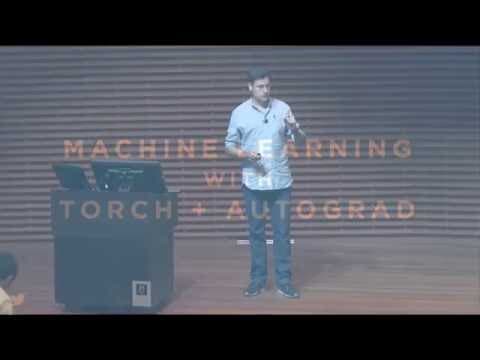
Context: Lex Fridman: "...bind together high-performance code with a scripting layer, and Redis and NGINX, which are kind of workhorses in the field of web development..." Spoken cleanly as "Engine-X" (⁄ˈɛndʒɪn ɛks⁄).
Definition: A web server which can also be used as a reverse proxy, load balancer, and HTTP cache.
Linux & Systems: Sudo, Daemon, and Idempotent
In Unix environments: "Daemon" (a background process) is pronounced identically to "demon" (⁄ˈdiːmən⁄). "Idempotent" (an operation that can be applied multiple times without changing the result) is pronounced "eye-dem-POH-tent" or "eye-DEM-puh-tent" with stress on the second syllable.
Developer Audio Guide & Phonetic Transcriptions
Click through our interactive developer dictionary below to calibrate your pronunciation with standard industry conventions.
kubernetes
Watch in contextFour syllables: koo-ber-NET-eez
Non-rhotic: koo-buh-NET-eez
Borrowed from the ancient Greek word for "helmsman". Pronounced "koo-ber-NET-eez", with four distinct syllables.
nginx
Watch in contextAlways "Engine X"
Always "Engine X"
Never spell it out letter-by-letter as "N-G-I-N-X". It was created to mean "Engine X" and is universally pronounced as such.
postgresql
Watch in contextCommonly just "Postgres" (POHST-gres)
POHST-gres
While the formal name is "Post-gres-Q-L", working developers almost universally shorten it to "Postgres" (⁄ˈpoʊstɡrɛs⁄).
sudo
Watch in contextBoth "SOO-doo" and "SOO-doh" accepted
Commonly "SOO-doo"
Derived from "SuperUser DO". The creators intended "SOO-doo", though "SOO-doh" is widespread in American developer circles.
daemon
Watch in contextExact homophone with "demon"
Exact homophone with "demon"
Despite the classical "ae" digraph, it is phonetically identical to the word "demon" (⁄ˈdiːmən⁄). Never say "day-mon".
Speaking Confidently in Sprint Demos and Architecture Reviews
Flawless pronunciation of infrastructure terms builds instant technical credibility with clients, hiring managers, and investors. It signals that you belong in global architecture discussions.
Key Takeaway
Technical mastery extends to verbal articulation. Bookmark this glossary and practice with real video clips on SayItVid before your next sprint review!
Words in This Guide:

Elena Rostova
AuthorTech Industry Language Specialist
Former software engineer turned ESL educator, helping international engineering teams articulate technical concepts with confidence.